Most people still think of LinkedIn as a place to park an online resume. That undersells it. The real value shows up in day-to-day outcomes: a recruiter message that leads to an offer, a cold connection that becomes a closed deal, a post that gets your company noticed by the right buyer.
This guide breaks down why LinkedIn matters in practice, not just in theory, for individual professionals and for B2B businesses trying to turn the platform into a growth channel.
Key Takeaways
- LinkedIn's 1.2 billion members across 200+ countries make it the world's largest professional network.
- Individuals use it to build networks, accelerate job searches, and grow a personal brand.
- 76% of B2B marketers rate LinkedIn as an effective channel for thought-leadership content.
- Skipping LinkedIn means missed visibility with recruiters, clients, and decision-makers already active there.
- Real results require consistent engagement and, for businesses, a tested advertising strategy.
What Is LinkedIn? A Quick Refresher
LinkedIn is a professional social network connecting individuals and companies for networking, career growth, and business development. It officially launched in 2003 and has since evolved from a digital rolodex into a data-rich platform that drives measurable business outcomes.
Different groups use it for different reasons:
- Job seekers and recruiters find roles and source candidates
- Sales professionals prospect leads and research accounts before outreach
- B2B marketers build brand authority and run targeted ad campaigns
- Companies vet talent, research partners, and track competitors
Treat LinkedIn as active infrastructure for outcomes: jobs landed, deals closed, and credibility built, not a profile you set up once and forget.
Key Advantages of LinkedIn
The advantages below tie to outcomes professionals and businesses actually track: visibility, pipeline, hiring speed, and revenue growth. Each one plays out differently depending on whether you're an individual professional or a B2B organization building a growth channel.
Advantage 1: Expands Professional Networks and Relationship Building
LinkedIn removes the geographic and gatekeeper barriers that used to limit networking to conference badges and warm introductions. Connection requests, industry groups, alumni networks, and algorithmic suggestions now surface relevant contacts automatically, whether that's a hiring manager three time zones away or a prospective client in an adjacent market.
This matters because it strips out the friction and cost of traditional in-person networking. Instead of cold outreach, you get warmer introductions rooted in shared connections or content engagement, which speeds up trust-building.
KPIs impacted:
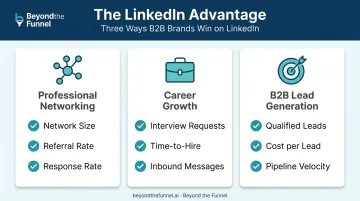
- Network size and quality of connections
- Referral and introduction rate
- Response rate to outreach messages
Career transitions, entry into new markets, and business development pipelines built from scratch are where this advantage pays off most.
Advantage 2: Accelerates Career Growth and Job Opportunities
LinkedIn works as a searchable, always-on resume paired with a live job board and recruiter visibility tools. "Open to Work" signaling, Easy Apply, and recruiter search filters mean opportunities can find you instead of the other way around.
This shortens time-to-opportunity compared to passive job searching. Recruiters are already primed to look there: Employ's 2024 Recruiter Nation Report found that 71% of talent-acquisition professionals currently use or plan to use LinkedIn for recruiting, making it the leading social channel for sourcing candidates.
Being visible there means access to roles that never get publicly posted, plus more leverage when multiple recruiters reach out at once.
KPIs impacted:
- Interview requests
- Time-to-hire
- Inbound recruiter messages
This advantage peaks during active job searches, career pivots, or when you want passive visibility while staying in your current role.
Advantage 3: Drives Business Growth Through B2B Marketing and Lead Generation
Company pages, thought-leadership content, and targeted LinkedIn Ads let B2B brands reach specific buyer personas directly, by job title, industry, company size, and seniority. Organic content builds trust over time; paid campaigns accelerate reach to decision-makers who'd otherwise never see the brand.
Targeted B2B advertising cuts wasted spend compared to broader social platforms built for consumer scrolling, not procurement decisions. Content Marketing Institute's 2025 B2B research found that 76% of B2B marketers rate LinkedIn as an effective channel for publishing thought-leadership content, ahead of every other platform in the survey.
Structured correctly, this combination produces predictable pipeline growth and shorter sales cycles instead of one-off traffic spikes.
KPIs impacted:
- Qualified leads generated
- Cost per lead
- Pipeline velocity
- Brand awareness
B2B companies scaling outbound and inbound efforts, entering new verticals, or needing a growth channel that doesn't rely on luck get the most value here. It's also where specialized LinkedIn advertising partners earn their keep. Beyond the Funnel, for example, applies a full-funnel testing approach that validates audiences with real data before scaling budget, rather than guessing which buyer segments will actually convert.
What Happens When LinkedIn Is Underutilized or Ignored
For individuals, skipping LinkedIn means reduced visibility to recruiters who are actively sourcing there, a weaker personal brand, and being invisible when someone searches your name before a meeting.
For businesses, the consequences compound:
- Heavier reliance on cold outreach and purchased lists
- Slower B2B lead generation and longer sales cycles
- Competitors capturing your target audience's attention instead
Inconsistency drives the real cost, not one missed opportunity here or there. Sporadic engagement means starting over every time instead of building lasting authority. A profile updated once and never touched again reads the same as one that never existed, at least to the algorithm and the people scrolling past it.
How to Get the Most Value from LinkedIn
LinkedIn delivers the most value when profiles and pages are complete, engagement is consistent, and outcomes get tracked over time, not treated as a one-time setup task.
For individuals:
- Update your experience and skills as they change, not once a year
- Publish insights or comments that show expertise, not just job updates
- Engage in relevant groups and conversations to stay visible between job searches
For businesses, organic content alone rarely drives growth fast enough. Pairing it with a structured, tested LinkedIn Ads strategy - guided by people who've actually run the campaigns - closes that gap.
This is where an agency like Beyond the Funnel fits in. Led by Joshua Stout, one of only 16 LinkedIn Certified Marketing Experts in the U.S., the agency helps B2B brands validate audiences with real data before scaling budget.
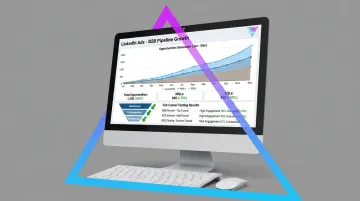
That approach delivers results: client Evidation grew its pipeline from a few dozen opportunities to over 100 in a single year after implementing this full-funnel strategy.
Conclusion
LinkedIn's importance comes down to consistent visibility, genuine relationship-building, and growth decisions backed by data instead of guesswork. None of that happens through a profile you set up once and forget.
The advantages compound over time, whether you're building a career or a B2B pipeline. A recruiter search today depends on the profile you updated last month, just as next quarter's closed deal often traces back to a connection made this week.
Take one concrete step now: audit your profile or your company page, find the biggest gap, and fix it. That single fix matters for individuals, but B2B brands need more than isolated tweaks to turn LinkedIn into a predictable growth channel. If that's your goal, Beyond the Funnel can help build the strategy behind it.
Frequently Asked Questions
Why should you use LinkedIn?
LinkedIn expands your professional network, keeps you visible to recruiters and clients, and helps businesses generate qualified leads. For individuals it accelerates career growth; for companies it builds brand authority and pipeline.
What is the main purpose of LinkedIn?
LinkedIn exists to connect professionals for networking, job searching, and business development. It combines a searchable resume and job board with a B2B marketing platform, all in one place.
Is LinkedIn free to use, or do I need Premium?
The free Basic account covers core networking: profile creation, connections, and limited saved searches. Premium tiers add features like outbound InMail credits, applicant insights, profile analytics, and LinkedIn Learning, depending on the plan.
How is LinkedIn different from other social media platforms?
LinkedIn is built around professional identity, careers, hiring, and business relationships rather than personal updates or entertainment. Platforms like Facebook and Instagram prioritize social and lifestyle content instead.
How can businesses use LinkedIn for B2B marketing and lead generation?
Businesses combine company pages, thought-leadership content, and targeted LinkedIn Ads to reach specific buyer personas by title, industry, seniority, and company size. Paid campaigns accelerate reach while organic content builds long-term trust.
How often should I update or engage on LinkedIn to see results?
Consistency matters more than frequency. Update your profile whenever your role or skills change, and aim for regular engagement, whether through comments, posts, or outreach, rather than sporadic bursts.