Introduction
A LinkedIn Lead Generation Funnel is a structured, multi-stage system of targeting, content, and ad formats that moves a LinkedIn member from first impression to sales-qualified lead. That's it. No mystery, no magic algorithm.
That structure matters most for teams under pressure to prove ROI. This guide is built for B2B marketers and demand gen teams at SaaS, finance, tech, and healthcare companies who need predictable pipeline from LinkedIn, not just clicks.
Here's the problem: "funnel" gets thrown around constantly in B2B marketing, but most teams never actually build one. They run LinkedIn ads as a single campaign with a single message, wonder why cost-per-lead is high, and blame the platform.
This article breaks down what the funnel actually is, why it matters for B2B growth, how each stage functions, and the mistakes that determine whether it works or wastes budget.
Key Takeaways
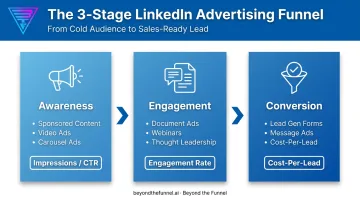
- LinkedIn funnels run on three stages: Awareness, Engagement, and Conversion
- Lead quality, not form-fill volume, is the metric that predicts revenue
- Layered targeting and Matched Audiences retargeting power every stage transition
- Pre-filled profile data in Lead Gen Forms removes friction at the conversion point
- Funnels need continuous testing, not a one-time setup
What Is the LinkedIn Lead Generation Funnel?
Think of it as a pathway. A cold LinkedIn audience enters at one end, exposed to targeting, content, and ad formats designed to move them forward one step at a time. A qualified sales conversation comes out the other end.
The goal isn't impressions, or even form completions on their own. This funnel exists to convert attention into pipeline-ready leads: people who match your ideal customer profile and have shown enough intent to warrant a sales conversation.
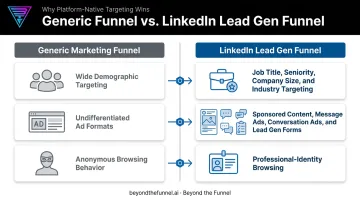
Here's what separates this from a generic marketing funnel:
- LinkedIn-native targeting: job title, seniority, company size, and industry — data points Facebook or Google Ads can't match
- Platform-specific formats include Sponsored Content, Message Ads, Conversation Ads, and Lead Gen Forms, all native to LinkedIn's ecosystem
- Members browse LinkedIn logged in as their professional selves, changing how they respond to B2B offers versus consumer platforms
A generic funnel talks about "leads." A LinkedIn funnel talks about VP-level titles, company headcount bands, and function-specific messaging, because that's the data the platform gives you access to.
Why the LinkedIn Lead Generation Funnel Matters for B2B Growth
B2B buying decisions aren't made by one person clicking "buy." Forrester's 2024 State of Business Buying report found an average of 13 internal participants involved in a purchase decision, with 89% of purchases spanning at least two departments.
That volume of stakeholders functions like a small company weighing in on your product.
A single ad, seen once, by one person, doesn't stand a chance against that kind of buying complexity. You need a system that reaches multiple stakeholders across multiple touchpoints over time.
LinkedIn's Edge Over Other Channels
Not every social platform is built for this. A 2024 Metadata benchmark comparing major paid-social channels found LinkedIn posted the highest click-through rate among the three B2B channels it assessed, at 0.96%. The report didn't disclose sample size, so treat it as directional, not gospel.
Still, it lines up with what most demand gen teams already know: LinkedIn's professional targeting data produces a more relevant audience than platforms built around consumer behavior.
What Happens Without a Funnel
Skip the structure and here's what typically shows up:
- Spray-and-pray campaigns: one ad, one audience, no sequencing
- Oversized lead forms asking for eight fields when three would do
- No retargeting layer, so every visitor gets treated as brand new, forever
- High cost-per-lead, since you're paying cold-audience prices for every conversion
- Poor sales handoff because "leads" were never actually qualified
Trust-Building Content Isn't Optional
Thought leadership isn't a vanity exercise. The 2025 Edelman-LinkedIn B2B Thought Leadership Impact Report surveyed nearly 2,000 U.S. business executives.
It found that 79% of hidden decision-makers are more likely to advocate for proposals from companies that consistently produce high-quality thought leadership. That's a direct line between content strategy and vendor shortlisting.
A structured, tested full-funnel approach — audience validation, creative testing, staged content — separates predictable LinkedIn growth from inconsistent results.
Beyond the Funnel built its entire methodology around this framework, testing it across SaaS, finance, and healthcare accounts. Founder Joshua Stout refined the approach after managing more than 1,000 LinkedIn ad accounts.
How the LinkedIn Lead Generation Funnel Works: The 3-Stage Flow
At a high level, the funnel reaches a broad relevant audience, builds trust and consideration, then captures the most qualified prospects at the point they're ready to talk.
The inputs that drive it:
- Buyer personas mapped to real job functions
- Layered targeting (job function + seniority + industry)
- Matched Audiences built from website visitors and contact/account lists
As prospects move through the stages, content and format shift from broad brand awareness to focused, action-driving offers. You control every stage transition through A/B testing creative, adjusting targeting scope, and tightening the offer based on what the previous stage's data actually shows.
The end result: a cold audience becomes a warm, sales-ready lead with a scheduled call or demo.
Step 1: Awareness (Attract)
This stage introduces your brand to the right personas before asking for anything in return. It relies on:
- Sponsored Content in the native feed
- Video ads for quick, scroll-stopping brand introductions
- Carousel ads for multi-point storytelling
Layered targeting keeps this stage focused on the right job titles and seniority levels instead of a broad, unqualified audience. You measure success here by impressions and click-through rate, not leads. Nobody converts on a first touch, and that's fine.
Step 2: Engagement (Educate & Qualify)
Once someone knows who you are, this stage builds enough trust to make them consider you seriously. The formats do the heavy lifting:
- Document ads that share a report or guide directly in the feed
- Webinars that position your team as the expert in the room
- Thought leadership content tied to the 79% advocacy stat above
Behind the scenes, this stage builds retargeting pools through Matched Audiences. It captures everyone who engaged, watched, or visited your site, so they can be retargeted later with a sharper offer.
Step 3: Conversion (Capture & Convert)
This is where intent turns into a lead. Lead Gen Forms pre-fill a prospect's LinkedIn profile data (name, email, employer, job title) so they can submit without typing anything manually. LinkedIn reports that 90% of its pilot customers beat their cost-per-lead goals using this format, with lower CPLs than standard Sponsored Content alone.
Message Ads pair well here too, landing directly in a prospect's inbox with a specific, high-value offer:
- A personalized demo
- A free consultation
- An audit or assessment
The offer needs to be worth the exchange. Vague "learn more" CTAs underperform against something concrete and time-bound.
Key Factors, Common Mistakes, and When a Full Funnel Isn't Needed
What Actually Affects Funnel Performance
Five variables determine whether a LinkedIn funnel produces pipeline or just burns budget:
- Targeting precision: how tightly your persona/ICP matches layered filters and Matched Audiences
- Content relevance: creative quality matched to the specific stage a prospect is in
- Lead form length: fewer fields generally mean higher completion rates, since every extra field is a reason to abandon
- Budget and bid strategy: scaled appropriately to your actual B2B audience size, not a generic benchmark
- Sales-marketing alignment: clear MQL/SQL definitions so leads don't die in handoff limbo
Common Misconceptions
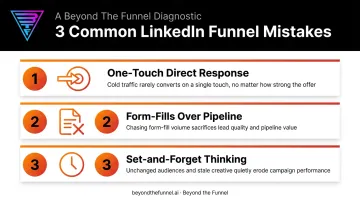
Even when these variables are dialed in, execution mistakes can still stall results. Three show up over and over:
- One-touch direct response: A single campaign asking cold traffic to book a demo rarely works. LinkedIn rewards sequencing.
- Form-fills over pipeline: A hundred leads that never book a call are worse than twenty that do.
- "Set and forget" thinking: Funnels degrade without ongoing testing. Audiences fatigue, creative wears out, and offers need refreshing.
When a Structured Funnel May Not Be Necessary
Fixing these mistakes still assumes a full funnel is the right structure for your business. Consider skipping the multi-stage approach when:
- The offer is low-cost and highly transactional, where direct-response ads alone can work fine
- You're targeting an extremely narrow, well-known niche audience that only needs a single retargeting layer
- Your company is very early-stage with low brand awareness; invest in pure awareness first before layering conversion tactics on top
A funnel built for the wrong stage of company maturity wastes as much budget as no funnel at all.
Conclusion
A LinkedIn Lead Generation Funnel connects targeting, content, and offers into a staged system that turns attention into qualified pipeline. What matters is delivering the right ad, to the right person, at the right stage of trust, not simply increasing ad volume.
Correct, stage-matched application, plus continuous testing, matters more than sheer volume of spend.
If you're trying to build this without guesswork, partnering with a specialized LinkedIn advertising expert helps. Beyond the Funnel is led by a LinkedIn Certified Marketing Expert who has managed and optimized more than 1,000 LinkedIn ad accounts across SaaS, finance, technology, and healthcare. That track record validates funnels with real campaign data instead of assumptions.
Frequently Asked Questions
What are the stages of a LinkedIn lead generation funnel?
The three stages are Awareness (introducing your brand to the right personas), Engagement (building trust through content), and Conversion (capturing leads with forms or Message Ads).
How long does it take to build a working LinkedIn lead gen funnel?
Timelines vary by industry and budget, but initial testing and optimization typically take several weeks to a few months. Meaningful pipeline results are usually measured over a full year of continuous refinement.
What's the difference between a LinkedIn sales funnel and a lead gen funnel?
A lead gen funnel focuses on capturing qualified leads through targeting and offers. A sales funnel picks up after capture, nurturing that lead through the sales cycle toward closed revenue.
What ad formats work best at each funnel stage?
Sponsored Content and video work best for awareness. Document ads and webinars drive engagement, while Lead Gen Forms or Message Ads close out conversion.
How do you measure LinkedIn funnel performance?
Track impressions and CTR at awareness, engagement rate and retargeting pool growth at consideration, and cost per lead plus demo/pipeline conversion at the conversion stage. Each stage needs its own metric, not one blended number.
How much should a B2B company budget for LinkedIn lead generation?
Budget depends on your audience size, industry CPCs, and which funnel stage you're prioritizing. Most teams start with a smaller test budget to validate audiences and creative before scaling spend.