Introduction
No other ad platform puts you in front of decision-makers quite like LinkedIn does. In fact, 85% of B2B marketers say LinkedIn delivers the best value of any social platform, according to Content Marketing Institute's 2025 B2B benchmark report — nearly triple the score for Facebook.
Yet most B2B teams still get LinkedIn wrong. Some avoid it entirely, scared off by higher costs. Others launch campaigns with no funnel logic, burn through budget, and conclude the platform "doesn't work."
Neither outcome is necessary. This guide covers every LinkedIn ad format, the targeting layers that actually move the needle, realistic budget benchmarks, and the optimization habits that turn LinkedIn into a repeatable revenue channel rather than a one-off experiment.
Key Takeaways
- LinkedIn's CPCs run higher than Meta or Google, but the trade-off is access to harder-to-reach B2B decision-makers
- Matching ad format to funnel stage matters more than picking a single "favorite" format
- Small-budget audience testing beats "set it and forget it" targeting every time
- Consistent measurement against clear KPIs separates scalable programs from scattered campaigns
- Multi-week testing windows are non-negotiable given LinkedIn's slower engagement cycle
Why LinkedIn Deserves a Central Role in Your B2B Ad Strategy
The 85% figure above isn't a fluke. It reflects something structural about how LinkedIn works compared to consumer-first platforms.
It's Built on Professional Data, Not Just Interests
Meta and TikTok infer interests from behavior. LinkedIn starts with verified job titles, seniority levels, company size, and industry: data users provide directly and keep updated because their careers depend on it. That's a different signal than "liked a page about productivity software."
This precision matters because B2B purchases rarely involve one person clicking "buy." A typical enterprise software deal touches:
- The end-user who identifies the problem
- A manager who champions the solution internally
- A finance lead who scrutinizes the budget
- An executive who signs off
LinkedIn lets you build campaigns around each of those personas by function and seniority, something no consumer platform can replicate at scale.
Long Sales Cycles Need Precision, Not Reach
B2B deals often take months to close. Broad-reach platforms optimize for immediate action, which works against you when the buying committee needs weeks to evaluate. LinkedIn's targeting depth lets you stay in front of the right stakeholders throughout that longer window instead of paying to reach people who were never going to buy.
That long-cycle reality is also why platform-specific expertise matters. Beyond the Funnel is led by Joshua Stout, one of just 80 LinkedIn Certified Marketing Experts worldwide, and the work is built around LinkedIn-native strategy rather than generic ad management.
The Complete LinkedIn Ad Format Toolkit for B2B Marketers
LinkedIn offers 11 distinct formats, but not all of them deserve equal attention. Here's what each one actually does.
Sponsored Content: Native Ads in the Feed
Sponsored Content is the backbone of most LinkedIn programs. It appears directly in the feed and includes five sub-formats:
- Single Image Ads — the simplest entry point, one image per post, ideal for testing messaging quickly
- Video Ads — support 3 seconds to 30 minutes of runtime, well-suited to product demos or customer stories
- Carousel Ads — 2 to 10 scrollable cards, useful for walking prospects through a multi-step story
- Document Ads — in-feed PDF or deck previews and downloads; strong for case studies and research reports
- Event Ads — promote LinkedIn Events and drive registrations from a targeted professional audience
Thought Leader Ads are the newer addition here. Instead of sponsoring a branded company post, you sponsor a post from an individual—usually an executive.
Use them when you want credibility for a leader’s voice rather than a company-branded push. They often outperform standard posts on engagement because they don’t look like ads.
Sponsored Messaging: Message Ads and Conversation Ads
Message Ads and Conversation Ads land directly in a prospect's LinkedIn inbox when they're active on the platform. Message Ads deliver a single, direct message. Conversation Ads offer a choose-your-own-path experience with multiple response options.
Both formats work particularly well for account-based marketing (ABM). If you've built a defined target account list, sponsored messaging lets you reach specific individuals inside those accounts with a level of personalization that a feed ad simply can't match.
Dynamic Ads and Text Ads: Lightweight Formats for Awareness and Follower Growth
Three lower-cost, self-serve formats round out the toolkit:
- Spotlight Ads — personalized dynamic ads that click straight through to a landing page
- Follower Ads — designed specifically to grow your Company Page audience
- Text Ads — simple, self-service pay-per-click ads for driving website traffic
These formats rarely drive high-intent conversions, but they're inexpensive ways to build awareness and grow your following over time.
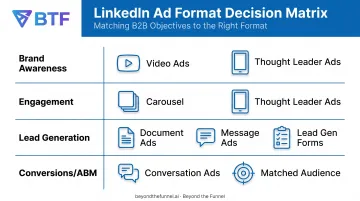
Quick decision framework:
| Objective | Best options |
|---|---|
| Brand awareness | Video Ads, Thought Leader Ads |
| Engagement | Carousel Ads, Thought Leader Ads |
| Lead generation | Document Ads, Message Ads, Lead Gen Forms |
| Conversions/ABM | Conversation Ads, Matched Audience retargeting |
Building a Full-Funnel B2B LinkedIn Ad Strategy
Picking a good format means nothing without the right audience and funnel logic behind it.
Audience Targeting and Validation
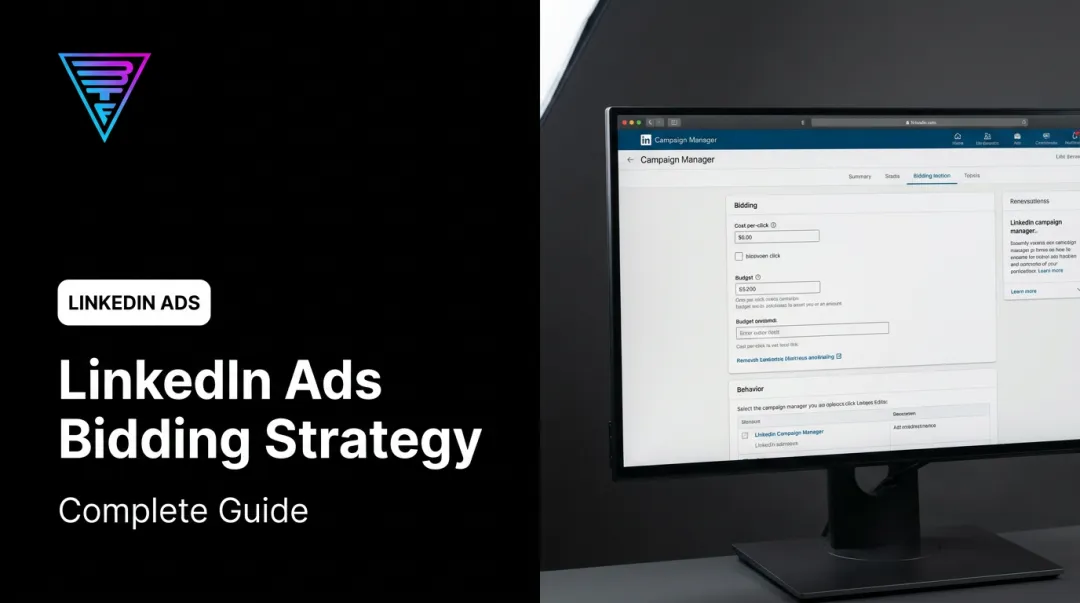
LinkedIn's Campaign Manager gives you an unusual amount of targeting depth:
- Job function, title, and seniority
- Company industry, size, and revenue
- Member skills and years of experience
- Matched Audiences (uploaded contact or account lists for ABM)
Here's the catch: stacking too many layers narrows your audience so much that CPCs spike, sometimes without meaningfully improving lead quality. More filters aren't automatically better.
Audience validation keeps you from guessing. Run small-budget tests across two or three segments at once, then watch how each one engages and converts before you put full budget behind any of them.
At Beyond the Funnel, Joshua Stout's team uses that same "validate before you scale" approach on new accounts: test with real data, then double down on the segments that prove out.
Mapping Campaigns to Each Funnel Stage
Once you know which audiences respond, map campaigns to where those people sit in the funnel. A single campaign that tries to do everything usually does nothing well:
- Awareness (cold audiences): Video Ads and Thought Leader Ads that introduce your brand without asking for anything yet
- Consideration (warming audiences): Document Ads and Carousel Ads sharing educational content, case studies, and frameworks that build trust
- Lead generation (sales-ready prospects): Lead Gen Forms paired with Sponsored Content or Message Ads to convert interest into marketing-qualified leads
- Retargeting and ABM (engaged accounts): Matched Audience website retargeting and Conversation Ads to close high-value target accounts
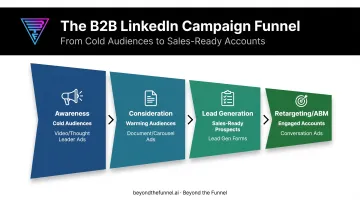
Each stage should feed the next. Skipping from cold awareness straight to a hard lead-gen ask is one of the fastest ways to waste spend.
Budgeting, Bidding, and LinkedIn Ad Costs
LinkedIn costs more than Meta or Google. That's just reality, and it's the trade-off for reaching an audience competitors can't easily access anywhere else.
According to Databox's 2025 LinkedIn ad cost analysis, the median CPC sits around $3.44, with median CPM around $30.19. Compare that to typical Meta traffic campaigns, which often run under $1 per click, and the gap is obvious. You're paying a premium for verified professional targeting, not just impressions.
CPC vs. CPM: When to Use Each
- CPM (cost per thousand impressions) fits awareness plays built for reach and visibility, such as Thought Leader Ads or top-of-funnel Video Ads
- CPC (cost per click) fits consideration and lead-gen campaigns, where you pay only when someone clicks toward a conversion
A Practical Budget Allocation Approach
Don't split your budget evenly across every idea you want to try. A more disciplined approach:
- Put the majority of spend behind audiences and formats you've already validated
- Reserve a smaller, dedicated slice for testing new segments or creative angles
- Keep testing and scaling budgets separate so a slow test doesn't quietly drain your best-performing campaigns
LinkedIn doesn't publish one universal daily minimum, though a new ad set generally requires $100 in unspent campaign budget before it can launch. In practice, most B2B teams need a meaningful monthly commitment to generate enough data for real audience validation. Testing on pocket change just delays learning.
Measuring Performance and Optimizing Your Campaigns
Spend without measurement is just guessing with extra steps.
The KPIs That Actually Matter
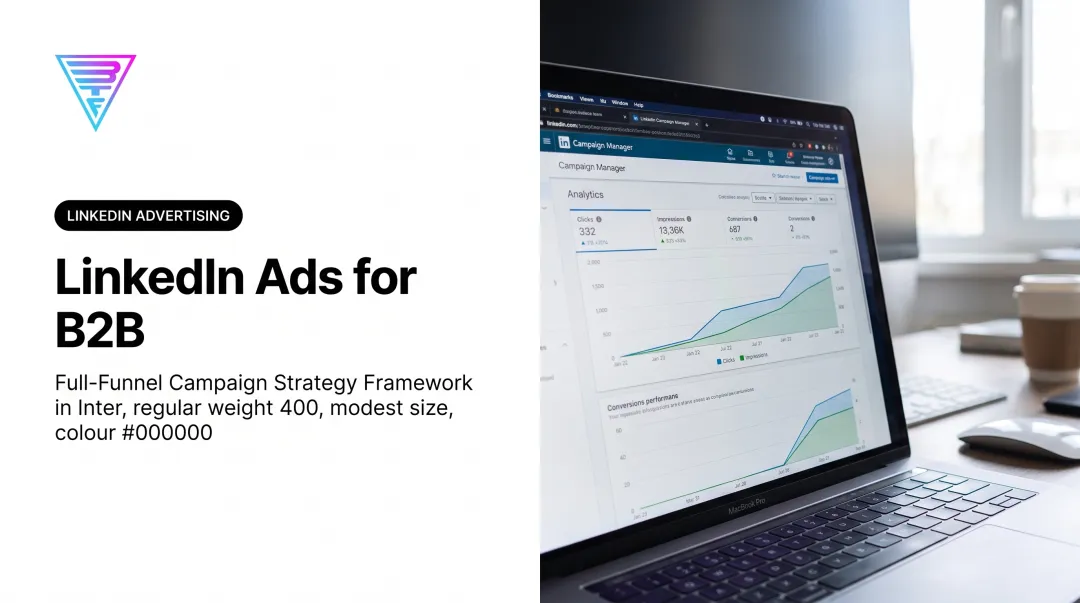
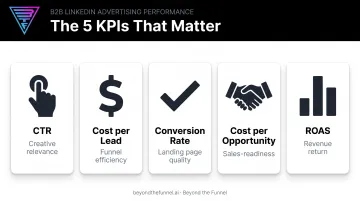
Track these metrics and map each one to pipeline impact—not in isolation:
- CTR — early signal of creative and messaging relevance
- Cost per lead — efficiency of your lead-gen funnel
- Conversion rate — quality of traffic reaching your landing page
- Cost per opportunity — how efficiently leads become real sales conversations
- ROAS — the ultimate tie-back to revenue
Connect Spend to Pipeline, Not Just Clicks
Install the LinkedIn Insight Tag before you spend a dollar. It's a lightweight script that enables conversion tracking, website retargeting, and aggregate audience insights (LinkedIn Insight Tag documentation). That connection is what ties ad spend to what happens after the click. Without it, you're optimizing for vanity metrics.
Build a Real Testing Cadence
Run A/B tests on creative, messaging, and audience — but give each test a minimum multi-week window. LinkedIn's engagement cycle moves slower than consumer platforms, so judging results after a few days almost always leads to the wrong conclusion.
Common mistakes that waste budget:
- Killing campaigns before they've had time to gather statistically meaningful data
- Running the same creative for months without refreshing it
- Blending testing budget and scaling budget so neither is measured cleanly
Most underperforming accounts we've seen share the same root cause: foundational structure built wrong from day one.
Ongoing, transparent reporting matters more than any single tactic. That discipline is what keeps a campaign compounding instead of plateauing after month two.
When Beyond the Funnel worked with Evidation, this full-funnel, validate-then-scale approach grew their pipeline from a few dozen opportunities to more than 100 within a single year. Structured testing and iteration drove that result.
Frequently Asked Questions
Is LinkedIn a B2B or B2C platform?
LinkedIn is a professional network built around careers, hiring, and business relationships. While it has some B2C elements like personal branding, its data and user intent make it uniquely effective for reaching business decision-makers.
What is the average cost of LinkedIn ads for B2B campaigns?
Recent data shows median CPC around $3.44 and median CPM around $30.19. Actual costs vary based on how many targeting layers you stack, your industry's competition, and which ad format you choose.
Which LinkedIn ad format works best for B2B lead generation?
Lead Gen Forms combined with Document Ads, Sponsored Content, or Message Ads consistently perform best. They reduce friction by pre-filling prospect information instead of sending people to an external landing page.
How much budget do I need to start advertising on LinkedIn?
LinkedIn requires roughly $100 in unspent budget to launch a new ad set, but meaningful audience testing typically needs a larger monthly commitment. Many B2B teams start around a few thousand dollars per month to generate usable data.
How long should I run a LinkedIn ad campaign before judging results?
Plan for at least 3–4 weeks before judging performance. LinkedIn's professional audience engages more slowly than consumer platforms, so early data rarely reflects true results.
Do I need an agency to manage LinkedIn ads effectively?
In-house teams can manage LinkedIn ads, but specialized expertise (such as working with a LinkedIn Certified Marketing Expert) often accelerates results through tested audience-validation frameworks and faster iteration.