Introduction
Most B2B brands treat LinkedIn ads like a guessing game. They launch a campaign, watch the spend disappear, and hope something sticks.
The top-performing advertisers don't guess. They follow a documented set of rules, refined through real account data, that separate predictable pipeline growth from wasted budget.
This list of 25 rules draws on insights from Beyond the Funnel founder Joshua Stout, a LinkedIn Certified Marketing Expert and one of only 16 in the U.S. He has managed and optimized more than 1,000 LinkedIn ad accounts.
The rules below are grouped into five categories: targeting, creative, campaign structure and testing, budget and optimization, and advanced tactics most self-managed accounts never touch.
Key Takeaways
- Disciplined targeting and fast creative refresh cycles beat bigger budgets, every time.
- The 95-5 rule guides how top advertisers split spend between brand-building and direct response.
- Video and Thought Leader-style content consistently earn stronger engagement than standard graphics.
- Most wasted spend traces back to overly broad targeting or missing conversion tracking from day one.
Audience Targeting Rules Every Top Advertiser Follows
Targeting mistakes cause more wasted LinkedIn spend than bad creative or weak offers combined. These five rules keep audiences tight enough to convert and broad enough to deliver.
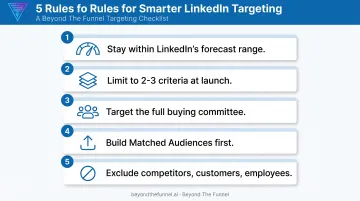
Keep your initial audience within LinkedIn's forecast range. Campaign Manager shows a live forecasted audience size as you build. Too-narrow audiences struggle to deliver; million-plus audiences dilute relevance. Watch the forecast tool, not a fixed rule of thumb.
Layer no more than 2-3 targeting criteria at launch. Stack job title, seniority, industry, and company size all at once, and your reach can shrink below viable delivery. Start lean, then add layers once you see engagement data.
Target the full buying committee, not just the decision-maker. B2B purchases typically involve five to ten influencers. Top advertisers build separate ad sets for end users, technical evaluators, and final approvers instead of one catch-all campaign.
Build Matched Audiences before prospecting cold. Upload CRM lists and website visitor data first. Warm audiences convert far more easily than cold ones.
Always exclude competitors, current customers, and employees. This one exclusion list prevents wasted impressions and keeps your reporting clean. Skip it, and your click-through data gets skewed by people who were never going to buy anyway.
Creative & Messaging Rules That Stop the Scroll
LinkedIn is a professional feed, which means the bar for "stopping the scroll" looks different than on consumer platforms. These five rules govern what actually earns attention.
- Respect LinkedIn's text limits to avoid truncation. Write tight, or your message gets clipped mid-sentence.
- Single Image Ads: ~150 characters of intro text, 70-character headline
- Video ads: longer intro text is fine; keep headlines near 70 characters (200 max) so they don't cut off on most devices
Front-load the hook in the first three seconds. LinkedIn videos autoplay muted in the feed, so your opening visual and captions carry the message before anyone unmutes. If the hook doesn't land instantly, the scroll continues.
Use real faces over stock graphics. B2B buyers have grown numb to polished corporate banners. A familiar founder, employee, or customer face cuts through because it feels human and specific.
Include one clear CTA per ad. Competing calls to action ("Learn More" and "Download Now" in the same creative) confuse the reader and split conversion intent. Pick one action and commit.
Refresh creative every 1-2 weeks. The same audience seeing unchanged creative for weeks will click less over time. Ad fatigue is real. A tight refresh cadence keeps CTR from sliding.
Campaign Structure & Testing Rules for Predictable Results
Structure determines whether your account produces consistent results or random spikes. These five rules build the testing discipline top advertisers rely on.
Run 4-5 ad variations per campaign from day one. More variations give LinkedIn's algorithm more signal to optimize toward, maximizing reach and avoiding creative fatigue.
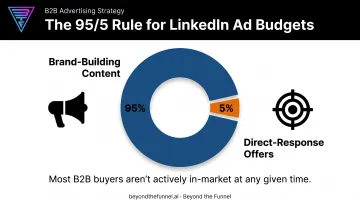
Follow the 95-5 rule. Researcher John Dawes found that roughly 95% of B2B buyers aren't actively in-market at any given time. Most of your budget should build brand memory rather than chase immediate conversions. Dawes frames 95% as a heuristic, not a fixed law, but the logic holds: skew spend toward brand-building content and reserve a small slice for direct-response offers aimed at buyers ready now.
A/B test one variable at a time. Change creative or targeting, never both together. Testing both at once means you can't tell which change actually caused the performance shift.
Match campaign type to the goal. LinkedIn's Accelerate automates targeting, creative, and bidding for speed. In LinkedIn's own testing, beta users built Accelerate campaigns 15% more efficiently than Classic campaigns and saw up to 42% lower cost per action across dozens of A/B tests. Classic still wins for precision ABM retargeting where manual control matters more than speed.
Sequence campaigns by funnel stage. Warm audiences with thought leadership and video content before ever asking for a lead form fill. Jumping straight to a hard conversion ask skips the trust-building step buyers need.
Budget, Bidding & Optimization Rules
Budget mistakes are often structural, not about spend size. These five rules cover the mechanics of pacing, tracking, and judging results correctly.
Launch on automated bidding, then shift to cost cap. Manual bidding before your account has data often stalls delivery entirely. Let the algorithm establish a baseline first.
Prefer lifetime budgets over daily budgets. A lifetime budget gives LinkedIn's system a longer window to allocate spend efficiently, rather than resetting pacing decisions every 24 hours.
Install the LinkedIn Insight Tag before spending a dollar. Skip this step, and conversion tracking and retargeting data for that period are gone permanently. There's no retroactive fix.
Judge cost-per-lead by pipeline quality, not the lowest CPL. A low CPL full of poor-fit leads costs more in wasted sales time than a higher CPL that produces sales-ready leads.
One Beyond the Funnel client, Evidation, grew LinkedIn-driven opportunities from a few dozen to more than 100 in a single year by prioritizing lead quality over volume.
- Give new campaigns 10-14 days before making changes. Frequent tinkering during the early optimization window resets the algorithm's learning progress and delays stable performance.
Advanced Rules Only the Top 1% Follow
These final five rules separate accounts run by specialists from accounts run by generalists.
Use Thought Leader Ads to promote employee posts. Boosting a real person's post instead of only brand-page content earns a stronger, more organic-feeling response. It reads like someone sharing an idea, not a company running an ad.
Build lookalike audiences from your best customers. Instead of stacking job title, industry, and seniority filters manually, feed LinkedIn your top-performing customer list and let it find similar profiles.
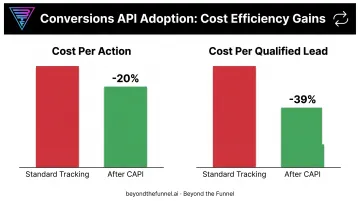
Implement the Conversions API for offline and cross-device tracking. Early LinkedIn CAPI adopters saw 20% lower cost per action and 39% lower cost per qualified lead, according to AdExchanger reporting. That's a meaningful gap for accounts still relying on browser-based tracking alone.
Treat LinkedIn ads as a long-term brand investment. The "Rule of 7" holds that buyers typically need multiple exposures before converting. Chasing one-touch conversions on a channel built for relationship-building sets unrealistic expectations.
Get a professional account audit from a certified expert. Self-managed accounts often carry structural and targeting mistakes that are invisible from the inside. A specialized partner like Beyond the Funnel, led by one of 16 LinkedIn Certified Marketing Experts in the U.S., reviews campaign structure, funnel logic, and audience targeting to find what's actually holding performance back.
Frequently Asked Questions
What are the best practices for LinkedIn ads?
Best practices center on tight audience targeting, frequent creative refreshes, one clear CTA per ad, and consistent A/B testing. The 25 rules above cover each of these in detail.
What is the 95-5 rule on LinkedIn?
Allocate roughly 95% of budget and content to brand-building—most B2B buyers aren't in-market at any given time. Reserve about 5% for direct-response offers aimed at buyers ready to act now.
What type of ads work best on LinkedIn?
Video and Sponsored Content, including Thought Leader Ads, tend to drive the strongest engagement, while Document and Message Ads often perform well for lead capture. Results vary by industry and campaign objective.
How much should a business budget for LinkedIn ads?
LinkedIn's CPCs and CPLs typically run higher than platforms like Google or Meta. Set your budget based on target lead volume and sales cycle length, not a fixed minimum spend.
How often should LinkedIn ad creative be refreshed?
Refresh creative every 1-2 weeks, or sooner if click-through rate starts declining. Waiting too long lets ad fatigue set in with your target audience.
Is LinkedIn advertising worth it for smaller B2B brands?
It can be, especially when the target buyer is a professional decision-maker. Smaller brands should start with narrow, high-intent campaigns rather than broad awareness plays that stretch limited budgets too thin.